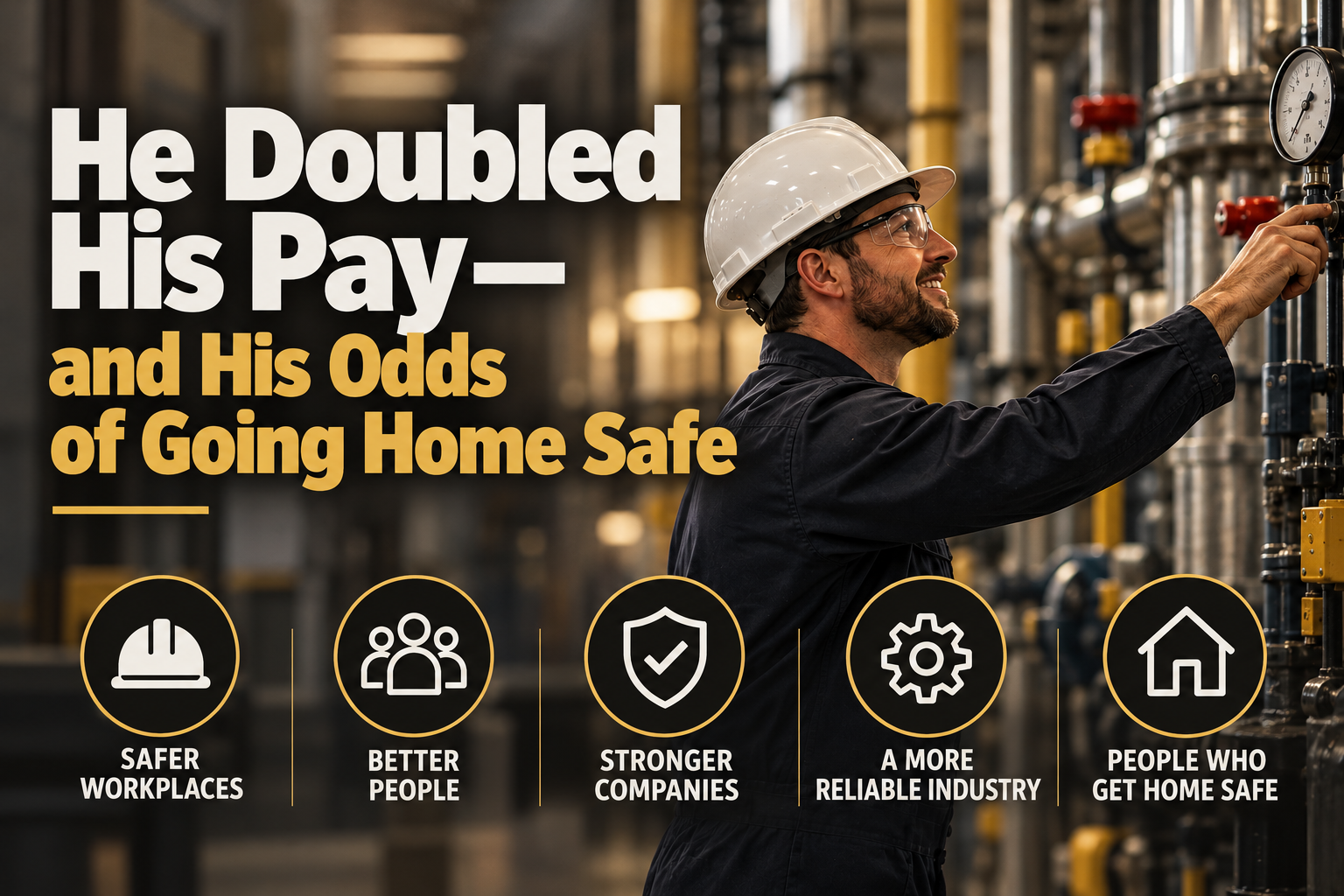
We recently talked with a new boiler operator, and his story stuck with us.
His last job was pipe fitting. The company he worked for didn’t seem to care much about safety recommendations. He routinely worked 40 feet off the ground without a safety harness—day after day, at a height where a single misstep is not a close call, it could be the end of the story.
For that, he was paid $20 an hour.
Today he works in a boiler room, for a company that puts safety first, and he makes twice that. Same person. Same work ethic. Twice the paycheck—and a set of odds that finally lean his way.
Let that sink in for a second.
Safety Is Not a Cost. It’s a Competitive Advantage.
A lot of companies still treat safety like a line item—something you spend on to satisfy a regulator. Sure there is a lot of verbiage about safety. Yes there are many that care about it. But this is a culture that is maintained. And this story is a reminder that safety is like a magnet. It attracts good people, and it keeps them.
Operators talk. They know who runs a tight, safe shop and who doesn’t. When a company ignores basic protections, the best people don’t just get hurt—they leave. And the ones who stay are watching the clock, waiting for something better. Meanwhile, a company that prioritizes safety gets something money alone can’t buy: experienced operators who trust their employer and stick around.
Here’s the math that’s easy to miss. Fall protection is not complicated. OSHA requires it at four feet in general industry and six feet in construction. That’s a harness, an anchor point, and a few minutes of training—not a fortune. Compare that to the real cost of a fall: a life, an investigation, fines, downtime, and the morale hit that follows everyone out the door.
What This Means for Facility Leaders
Safety is a hiring tool. Operators compare employers by how safe they feel, not just by the hourly rate.
Good pay and safe conditions aren’t a trade-off. The best shops offer both—and that’s exactly why they’re the best shops.
Training closes the gap. A new operator coming from a loose safety culture needs a clear, consistent standard from day one.
Culture is set at the top. If leadership shrugs at the obvious hazards, everyone below learns to shrug too.
The costs you avoid are the point. The harness, the guardrail, the lockout procedure—they’re cheap next to what they prevent.
That operator didn’t just double his income. He moved from a company that treated his safety as optional to one that treats it as non-negotiable. That’s a raise in pay and a raise in the odds he gets home every night.
If your steam system and your people are worth protecting—and they are—then safety isn’t the thing you do after the work. It’s how you earn the right to keep good people doing it.