
The Most Common Types of Steam Traps and How to Choose the Right One
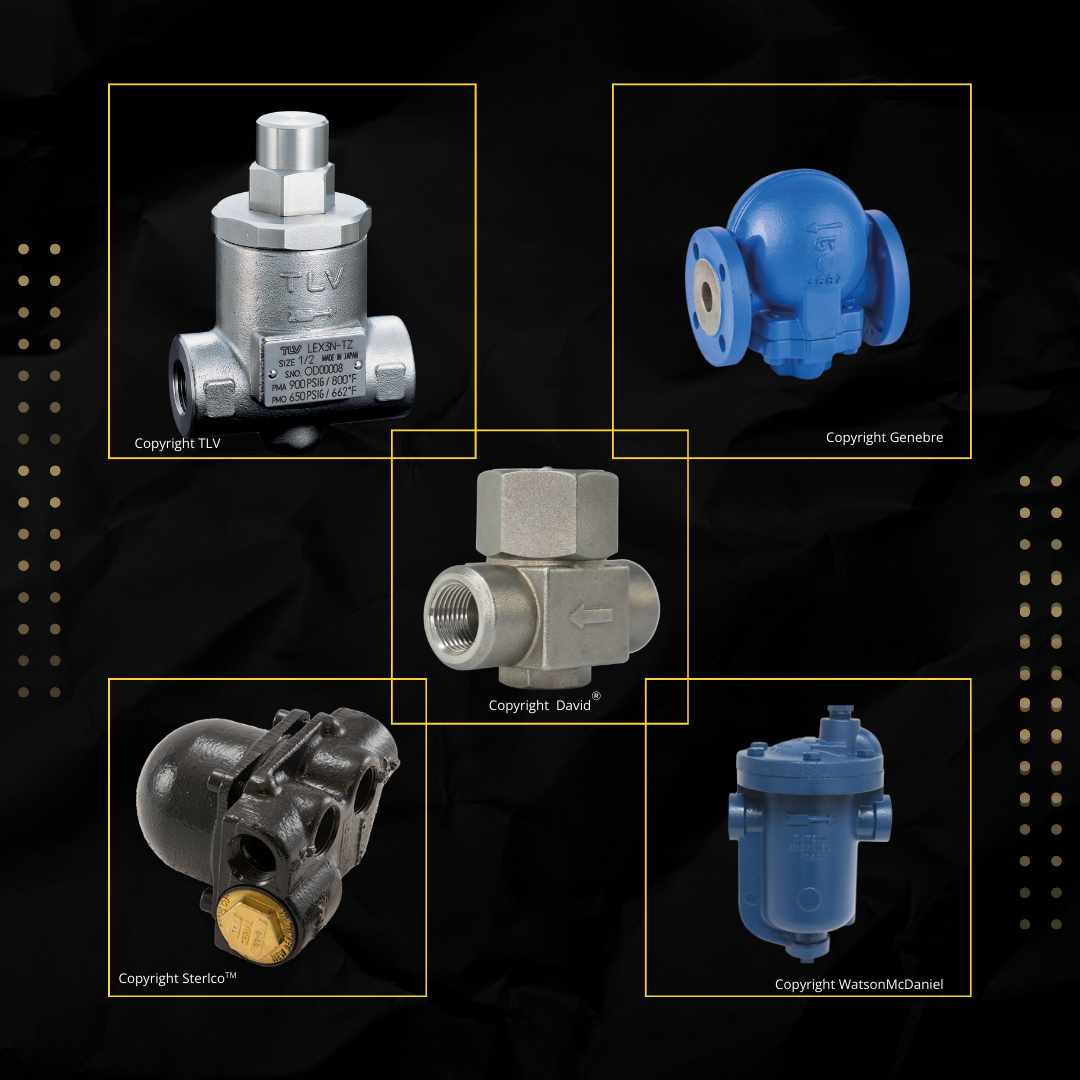
Your steam system is designed for steam. It's excellent at conveying steam at the right temperature and pressure wherever it needs to go. But steam isn’t the only thing in those pipes. Air, condensate, and impurities are fellow travelers wherever steam is moving. They can be major threats to your heat exchangers, pipes, and steam processes–which means they’re a threat to your safety and the bottom line. The solution? The humble, helpful steam trap.
Steam traps come in all shapes and sizes, but they provide similar functions and operate on the same principles. They are valves that automatically open and close in the presence of condensate. They use differential pressure to evacuate that condensate while keeping as much steam as possible trapped in the pipes.
Let’s look at some common trap designs. Understanding how these traps operate and their potential risks will help you choose the right steam trap for your needs.
Thermostatic Steam Traps
Thermostatic Steam Traps rely on the natural temperature differential between live steam and condensate or air to operate. A bellows or bimetallic with a malleable metal grows or shrinks in the presence or loss of heat. Heat from steam stretches the bellows or warps the metal, closing the trap. But when the trap is filled with condensate or air, the bellows and metal shrink, opening the valve and letting the condensate through. Once it's been emptied, heat from the steam closes the trap once again.
These are great designs for low condensate needs, but they may not be able to handle higher loads. Additionally, thermostatic steam traps, especially bellows designs, are easily damaged by water hammer.
Float Traps
A float uses the principles of buoyancy to automatically operate the trap. In much the same way most toilet tanks work, when water fills the trap, the float rises. Unlike your toilet however, a raised float opens an outlet valve in the trap, letting condensate flow freely into a condensate line.
Float traps deal with condensate well, but they often struggle to evacuate air or other trapped gases. Because of this, you need a more complex trap design.
Float-and-Thermostatic Traps
Just like their name implies, a float-and-thermostatic trap (often called an F&T trap) combines two trap designs into one. A float at the bottom of the trap handles the condensate while a bellows at the top clears trapped gasses. Normally, both the condensate and gas follow a condensate line to a collection tank–where the gas is vented, and the condensate captured for return use in the boiler.
Because of their more complicated design, an F&T Trap might be more expensive than other traps, but the initial cost is more than offset by the energy savings, especially in applications where lots of condensate must be removed quickly or continuously.
Inverted Bucket Steam Trap
Buoyancy can lift more than just a float. In an Inverted Bucket Steam Trap, a heavy, upside-down cup (or bucket) holds the trap open, letting condensate pass through. But as steam enters the trap, it fills the bucket, lifting it upwards, and closing the trap. It remains closed until enough condensate has filled the cup, once again letting it sink.
Because condensate needs to fill the bucket to open the trap, there’s a small air hole at the top of the cup which lets trapped gasses escape. While the Bucket Trap can handle large amounts of condensate, the necessarily small nature of the air hole means that it’s not a great design for evacuating trapped gases. Additionally, because the Bucket Trap must be filled with water, it's at risk of freezing conditions when installed outside and not properly insulated.
Disc Steam Trap (Thermodynamic)
A Disc Steam Trap uses a small, carefully sized disc to seal both the inlet and outlet sides of the trap. Pressure from the condensate lifts the disc up, letting the condensate flow through. But as steam enters the trap, it slips around the sides of the disc, placing pressure on top until the disc is held closed. It will stay this way, until the steam has cooled back into condensate, reducing the pressure enough for the disc to be raised again. Because it relies on the changing temperature of the steam, a disc trap activates in timed cycles, and in normal operation, you should be able to hear the disc click open or closed every twenty seconds or so.
While Disc Traps are reliable, and relatively inexpensive, they can wear down over time or fall victim to Air Binding, wherein the valve fails shut.
When choosing a steam trap, it's important to follow the manufacturers recommendations to buy the right trap for the job. By paying attention to the specific conditions that make up your steam system, you can pick a steam trap that will suit your needs, save money, and lower stress.
STEAMWORKS offers standard and custom training. Contact us today!